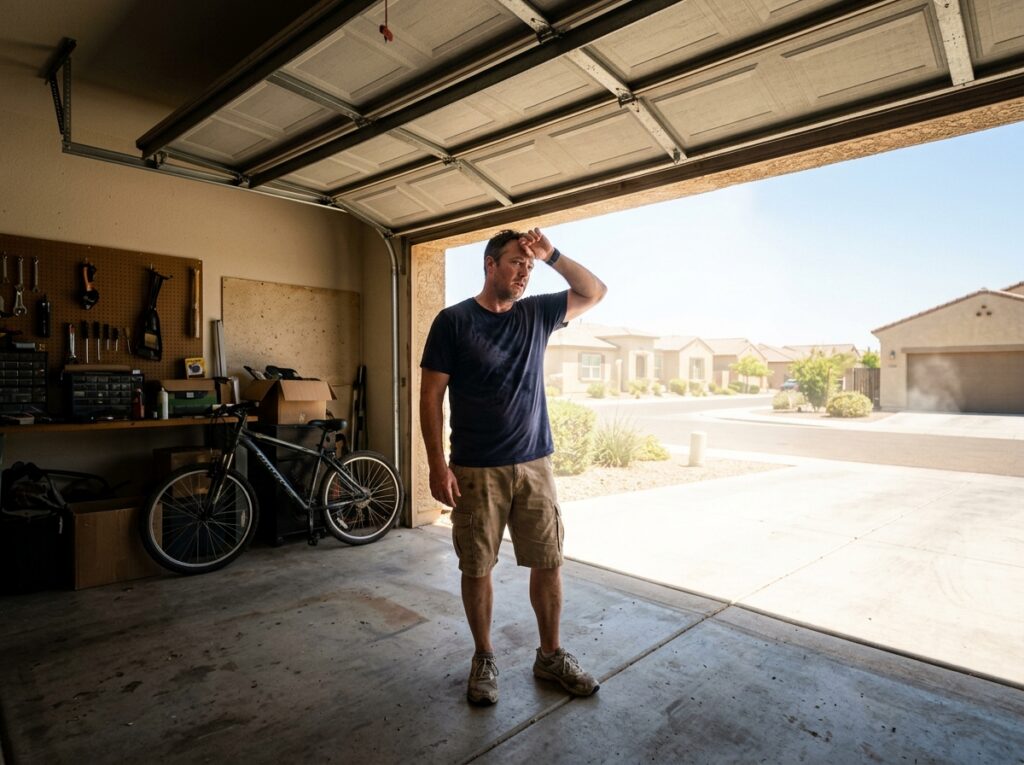
A higher R-value can slow heat flow, but the biggest number is not always the best buy. For garage door replacement in Eastmark, start with whether the garage is attached, how often you use it, and how well the door will seal. A local Mesa garage door installation service can also help you compare door construction before you pay for insulation you may not need.
Quick overview
- You see several R-values and do not know what the numbers mean.
- The garage gets very hot, but you are not sure insulation will fix the whole problem.
- One quote costs more because of insulation, windows, or thicker door sections.
- You want comfort without paying for features that will not help your garage.
In this guide
- Compare the full door build, not one insulation number.
- Ask for the exact R-value, door thickness, seal plan, and installed price in writing.
Simple version: match the door to the space.
- Detached and rarely used garage: a basic insulated option may be enough.
- Attached garage: compare mid- and higher-insulation doors.
- Room above or beside the garage: put more weight on insulation and sealing.
- Workshop or cooled garage: compare higher insulation plus strong perimeter seals.
TL;DR: Do not choose by R-value alone
- Use a higher insulation level when the garage affects nearby living space or you spend time inside it.
- Compare seals, windows, panel construction, and fit with the R-value.
- Ask for two or three door options with the installed price shown for each.
What an insulation rating tells you
R-value is a way to compare resistance to heat flow. A higher number usually means the insulated section resists heat flow better, but comfort also depends on the complete door and its fit. When comparing residential garage door installation, ask what part of the door the listed rating describes and whether the quote includes new perimeter seals.
Context (what matters in this situation):
- The rating is useful for comparing similar doors from the same maker.
- Windows can change how much heat enters through the door.
- Old or damaged bottom seals can let hot air, dust, and light through gaps.
- An attached garage may matter more to comfort than a detached storage garage.
How to choose the right level for an Eastmark home
Start with the garage, not the brochure. When you compare new garage door installation options, sort each door by how the garage connects to the home and how often the space is used. Then compare insulation, seals, windows, and total installed cost together.
What this usually looks like (real-world flow):
- First, note whether the garage is attached to the house.
- Next, check for a bedroom, office, or other living area beside or above it.
- Think about whether the garage is only for parking or also for hobbies, storage, or work.
- Compare door options with the same size and similar window layout.
- Choose the option that solves the real comfort need at a price you understand.
Details to confirm (so you get the right help fast):
- Detached storage garage: focus first on durable construction and good seals.
- Attached garage: insulation can be more useful because the garage shares part of the home envelope.
- Conditioned or frequently used garage: higher insulation may be worth comparing closely.
What you should get as the outcome:
- You can explain why you are paying for a higher or lower insulation level.
- You can compare quotes on the same door features.
- You are less likely to overpay for an R-value without checking seals and fit.
What an insulation upgrade may not include
A higher door price can include more than insulation. Before approving the job, compare the same line items across quotes, just as you would when reviewing double garage door replacement costs. Ask what is included and what can change after the old door is removed.
Limits / constraints (what can slow things down):
- The quoted R-value may apply to the door section, not every gap around the installed door.
- Decorative windows can affect heat gain even when the door panels are insulated.
- A new door does not automatically mean the opener must be replaced.
- A door upgrade will not fix heat coming from uninsulated walls or ceilings.
Hidden costs to watch for:
- Removal and disposal of the old door.
- Track, bracket, or hardware changes needed for the new door.
- Window, color, finish, or design upgrades.
- Opener adjustments or replacement if the existing unit is not a good match.
What to do before you choose a door
Ask for at least two door builds that fit the same opening. One can be a practical insulated choice and one can be a higher-insulation choice. A new garage door installation in Mesa quote should make the upgrade cost easy to see.
- Request the R-value, door construction, window details, seals, warranty, and installed price.
- Ask what changes in comfort or use the contractor expects from the higher-priced option.
Our recommendations for choosing insulation in Eastmark
Do not buy the highest R-value just because it is the highest number.
If the garage shares walls or a ceiling with living space, compare stronger insulation options.
If the garage is detached and only used for parking or storage, a simpler insulated door may be enough.
Choose good perimeter and bottom seals with the door.
Compare window area because glass changes the thermal performance of the door.
Get the installed price for each door option before deciding.
Safety checks before replacement day
Garage doors are heavy, and springs store a lot of force. If you are deciding whether a damaged section can stay in service, review the repair-versus-replacement points in replace a cracked panel or the whole door. Do not loosen springs, cables, or bottom brackets to inspect the door yourself.
A good option is:
- Keep people and pets away from a door that is off track, hanging unevenly, or making sharp popping sounds.
- Do not pull or adjust torsion springs, extension springs, lift cables, or bottom brackets.
- Use the opener only if the door moves normally and no part looks loose or damaged.
- Clear vehicles and stored items from the work area before installation.
- After installation, ask the technician to show the safety-reverse test and basic door care.
Scenario 1: The garage is attached but used mostly for parking
You want less heat transfer but do not plan to cool the garage like a living room. Compare a practical insulated door with a higher-insulation option and see the price difference. The same comparison method works when looking at garage door installation in Phoenix or other hot Arizona locations.
Do this:
- Put strong seals and solid door construction high on the list.
- Compare a mid-level insulated build with the next step up.
- Choose the upgrade only if the added comfort or room protection matters to you.
Scenario 2: A room sits above or beside the garage
Here, heat transfer through the garage can matter more to nearby living space. Compare a better-insulated door, strong weather seals, and limited glass if heat is the main concern. For larger properties or mixed-use spaces, commercial garage door installation shows why door use and construction should be matched before price alone.
We recommend this:
- Give more weight to insulation and air sealing.
- Ask how windows change the door option you are considering.
- Check the garage ceiling and shared walls too, because the door is only one part of the space.
Scenario 3: The garage is a workshop or cooled space
If you spend hours in the garage or actively cool it, a higher-insulation door may have more value. Pair the door with good seals and check other heat paths before expecting the door to solve everything. You can use the same checklist when comparing garage door installation in Gilbert.
Here’s a simple path forward:
- Compare higher-insulation door builds first.
- Use good bottom and perimeter seals.
- Check walls, ceiling, windows, and air leaks so the new door works as part of the whole space.
Suggested plan:
3 steps to compare Eastmark replacement options
Step 1: Define how you use the garage
Step 2: Share the opening and door details
Step 3: Compare complete door builds
The U.S. Department of Energy explains what R-value measures and why a higher number means more resistance to heat flow. Use the DOE insulation guide to understand the rating before comparing door quotes. Then compare that rating with the door seals, glass area, and the way you use the garage. The guide is background information, not a garage-door quote or a required rating for your home.
Garage door insulation FAQs for Eastmark homeowners
Is the highest R-value always the best garage door choice?
No. The best choice depends on how the garage connects to your home, how often you use the space, and what the upgrade costs. Before replacing storm-damaged doors, the same rule applies: compare the full scope and review questions like those in garage door replacement after monsoons.
Does an attached garage need more insulation than a detached garage?
Often, an attached garage gives you more reason to compare higher-insulation doors because it shares part of the home with living space. A detached garage used only for parking or storage may not need the same level. Seals and fit still matter in both cases.
Can a higher R-value keep an Eastmark garage cool by itself?
No. A better-insulated door can slow heat flow, but walls, ceiling, windows, air leaks, and sun exposure also affect the space. When comparing garage door installation in Glendale, ask how the new door and seals fit into the whole garage.
Do garage door windows reduce insulation?
Windows can change the thermal performance of the door because glass is different from an insulated panel. Ask for the door rating and window details for the exact design you are buying. If heat is a main concern, compare a smaller glass area with your preferred look.
Should I replace my garage door opener at the same time?
Not always. If the opener is working, properly sized, and compatible with the new door, it may be able to stay. Ask the installer to show any reason a new opener is recommended and list that cost separately.